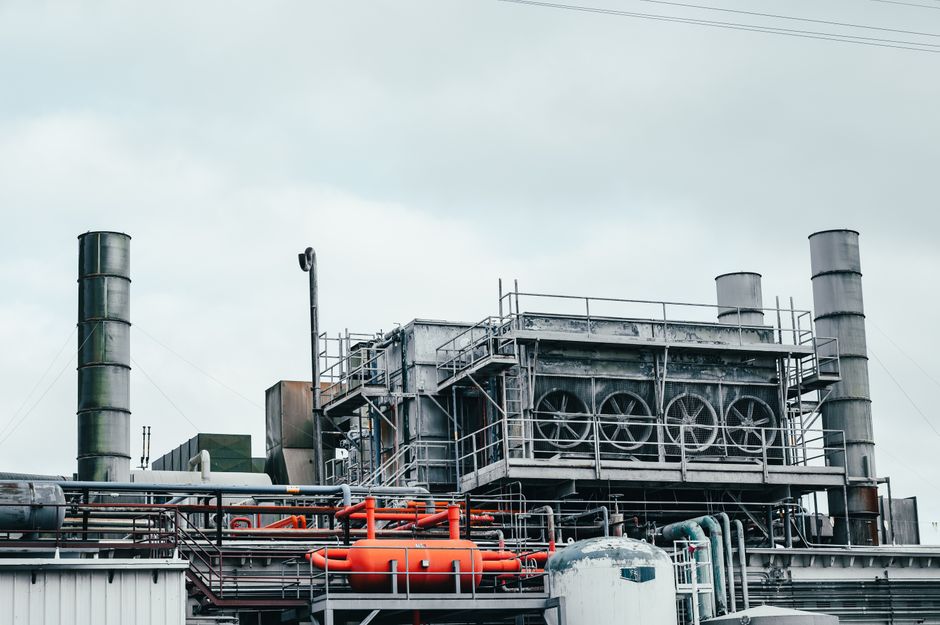
Korea has well over a thousand designated industrial complexes, and an investor evaluating one should first decide which of four complex types, or which foreign investment zone, fits the project. According to InvestKOREA, the national investment promotion portal run with KOTRA, there were 1,315 designated complexes in the second quarter of its latest industrial-sites report, and about 96% of the developed industrial area had been sold. Availability, lease terms and incentives therefore depend on the specific site, not on the label “industrial complex”.
The four complex types and how many exist
InvestKOREA’s industrial sites report breaks the 1,315 designated complexes (as of the second quarter of that report) into four types:
| Type | Number designated |
|---|---|
| National industrial complexes | 51 |
| General industrial complexes | 735 |
| Urban high-tech industrial complexes | 46 |
| Agricultural and industrial complexes | 483 |
The same report gives sales rates of 97.3% for national complexes and 95.0% for general complexes, against 96.0% overall. A high sales rate does not mean nothing is available, but it does mean an investor should ask early what land or leased space remains, and in which complex.
Industrial complex, foreign investment zone or individual site
InvestKOREA’s page on industrial locations separates the options. Industrial complexes are government-developed parks. Foreign investment zones are described as complexes for lease exclusively to foreign-invested companies, alongside free economic zones and free trade zones. Individual locations are non-designated sites where a company can build a factory by obtaining permits under the National Land Planning and Utilization Act.
According to InvestKOREA, the advantages of a complex include simplified procedures for factory establishment permission, better infrastructure and support facilities, shared technology exchange and lower distribution costs. The stated disadvantages of an individual location are more complex authorisation, fewer tax and financial incentives, the need to install your own infrastructure, and environmental control challenges.
Foreign investment zones: counts and thresholds
The industrial sites report lists 110 foreign investment zones as of March 2024: 30 complex-type, 76 individual-type and 3 service-type. InvestKOREA gives the following entry conditions:
- Complex-type zones (inside existing industrial complexes): a minimum foreign stake of 30% (50% for logistics) and a minimum investment of KRW 100 million, with registration as a foreign-invested company under the Foreign Investment Promotion Act.
- Individual-type zones: minimum investment of USD 30 million for manufacturing, USD 20 million for tourism and USD 10 million for logistics.
InvestKOREA’s foreign investment zone page states that the 30 complex-type zones are spread across 11 provinces and metropolitan cities, with concentrations in Gyeonggi Province (four zones) and Chungcheongnam Province (five zones). Designation involves negotiation between KOTRA, local governments, the investor and the Ministry of Trade, Industry and Energy.
Lease terms and incentives to ask about
For investors who prefer not to buy land, InvestKOREA describes lease-only industrial complexes designated for long-term leasing, up to 50 years, at low cost, with priority for foreign-invested companies and returning (reshoring) Korean companies. It also lists 14 national lease industrial complexes outside the Seoul metropolitan area, intended for balanced regional development.
The incentives named in the sources include:
- Reductions in acquisition and property taxes of up to 100%.
- Customs duty exemptions for five years, including tariff exemptions on capital goods imports in foreign investment zones.
- Rent set at about 1% of acquisition cost in lease complexes, compared with 5% for public land, according to the industrial sites report.
- Local tax exemptions for up to 15 years in foreign investment zones, in accordance with local government ordinances.
- Rental fee support in foreign investment zones: 75% reductions for manufacturing investments of USD 2.5 million or more with 70 or more employees, and 100% for 10 years for investments of USD 1 million or more in growth industries.
These are the headline figures as published. Each depends on the investment size, industry, number of employees and the local ordinance, so the numbers above show what to ask about, not what a particular project will receive.
A due-diligence checklist for a complex
- Name the complex type. National, general, urban high-tech, agricultural-industrial, lease-only or a foreign investment zone each carries different rules.
- Ask what is still available. Request current vacancy or remaining-lot information from the managing body, since sales rates are high.
- Match your industry to the site. Complexes are designated with particular industries in mind; confirm your activity is permitted in that complex.
- Test the incentive thresholds. Compare your planned investment amount and headcount with each threshold above.
- Compare lease against purchase. Ask for the rent basis, term and renewal conditions in writing.
- Contact the official channels. InvestKOREA lists the Korea Industrial Complex Corporation (KICOX) as the primary contact for industrial complexes.
Common mistakes and what to verify
- Relying on an old count. Figures such as the number of national complexes change as designations change. The sources above carry their own dates (second quarter and March 2024); ask for the current numbers.
- Assuming incentives are automatic. InvestKOREA describes application steps for tax reductions through the Ministry of Economy and Finance, so incentives must be applied for.
- Ignoring the foreign stake rule. A complex-type foreign investment zone needs a minimum 30% foreign stake (50% for logistics).
- Confusing zone types. Complex-type and individual-type zones have very different investment thresholds.
Rules change: confirm with the official bodies
This article is general information for people researching Korea as a location. It is not investment, tax or legal advice and does not rate any complex or region. Designations, incentives and thresholds are set by the Ministry of Trade, Industry and Energy, the Ministry of Economy and Finance, local governments and bodies such as KOTRA and KICOX, and they can be revised. Confirm the current position with InvestKOREA or KICOX, and consult a qualified adviser for tax and legal questions, before committing to a site.
Sources
- InvestKOREA: Industrial Sites in Korea (KOTRA report) – complex counts by type, sales rates, foreign investment zone counts and thresholds, lease complexes, incentives
- InvestKOREA: Understanding Industrial Locations – types of planned and individual locations, advantages and disadvantages
- InvestKOREA: Foreign Investment Zones overview – zone types, individual-type thresholds, tax and rental incentives, geographic distribution
- InvestKOREA: Foreign direct investment procedure – steps for foreign investment notification and tax reduction applications